If you’ve ever paused mid-sentence wondering whether to say what kind of or what kinds of, you’re not alone. These two phrases look almost identical, yet they serve slightly different purposes in English grammar.
Understanding when to use each can instantly make your speech and writing sound more natural and confident.
In this guide, you’ll learn the exact difference, simple rules, real-life examples, common mistakes, and practical tips so you never hesitate again.
If you’re a student, writer, or English learner, this explanation is designed to be friendly, clear, and easy to apply.
Quick Answer
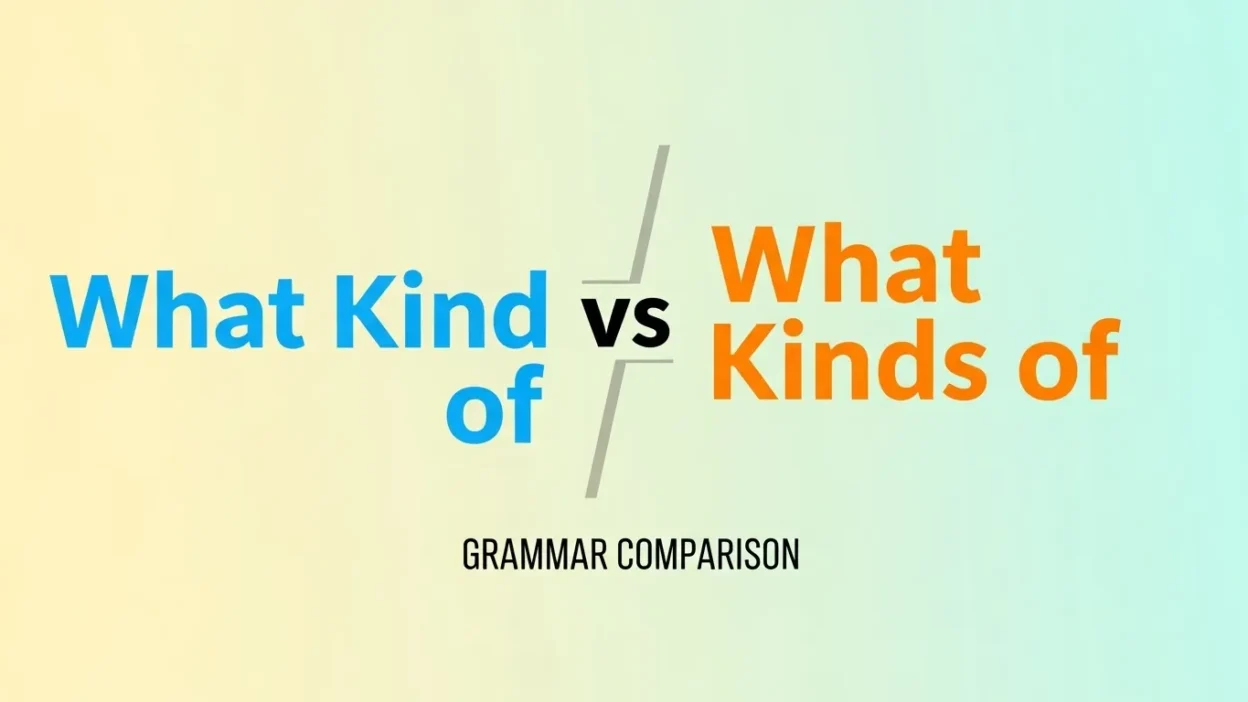
Use “what kind of” when asking about one type or category. Use “what kinds of” when asking about multiple types or categories.
- What kind of music do you like? → asking about one category
- What kinds of music do you like? → asking about several categories
Meaning of “What Kind of”
“What kind of” is a question phrase used to ask about a single category, type, or class of something. Even if the answer contains multiple examples, the question itself focuses on one general classification.
Structure:
What kind of + singular noun
or
What kind of + uncountable noun
Examples:
- What kind of food do you prefer?
- What kind of job are you looking for?
- What kind of advice did she give you?
In each case, the speaker wants one general category, not a list of multiple types.
When to Use It
Use what kind of when:
- You expect one main answer
- You’re asking about a general category
- The noun is singular or uncountable
Meaning of “What Kinds of”
“What kinds of” is the plural version and is used when asking about multiple categories or varieties. It signals that you want more than one type as an answer.
Structure:
What kinds of + plural noun
Examples:
- What kinds of books do you read?
- What kinds of problems are you facing?
- What kinds of movies does he enjoy?
Here, the speaker expects several types rather than one broad category.
When to Use It
Use what kinds of when:
- You want multiple examples or categories
- The noun is plural
- You’re comparing varieties
Key Difference Explained Simply
The difference comes down to number and expectation:
- Kind = one category
- Kinds = multiple categories
Think of it like this:
If your question could be answered with one label, use singular.
If your question invites a list, use plural.
Comparison Table: What Kind of vs What Kinds of
| Phrase | Number | Noun Form | Purpose | Example |
| What kind of | Singular | Singular/Uncountable | Ask for one type | What kind of tea do you drink? |
| What kinds of | Plural | Plural | Ask for multiple types | What kinds of teas do you drink? |
Real-Life Example Scenarios
Scenario 1: At a restaurant
- What kind of soup is this? → Asking about one variety.
- What kinds of soups do you serve? → Asking about the menu options.
Scenario 2: Job interview
- What kind of work environment do you prefer? → One overall type.
- What kinds of projects have you worked on? → Several categories.
Scenario 3: Classroom
- What kind of book is this? → One genre.
- What kinds of books do you like reading? → Multiple genres.
Common Mistakes and How to Avoid Them
Mistake 1: Mixing singular with plural nouns
❌ What kind of books do you like?
✔ What kinds of books do you like?
Why: “Books” is plural, so the question should match.
Mistake 2: Using plural when singular is intended
❌ What kinds of music is this?
✔ What kind of music is this?
Why: “Music” is uncountable, so use singular.
Mistake 3: Overthinking when both are possible
Sometimes both are grammatically correct but slightly different in meaning:
- What kind of movies do you like? → One main preference.
- What kinds of movies do you like? → Multiple preferences.
Both are acceptable; your choice depends on what you want to ask.
Helpful Memory Trick
Remember this simple rule:
Kind = one. Kinds = many.
If you can replace your question with “which type,” use singular.
If you could replace it with “which types,” use plural.
American vs British English Differences
There is no grammatical difference between American and British English for these phrases. Both dialects follow the same rules for singular and plural forms.
The only variation you might notice is stylistic:
- American English tends to prefer direct questions: What kind of work do you do?
- British English sometimes softens tone: What kind of work is it that you do?
But the core grammar remains identical worldwide.
Related Phrases and Synonyms
Understanding similar expressions helps strengthen your language skills:
- Which type of
- Which types of
- What sort of
- What sorts of
- What category of
Example:
- What sort of food do you like? (same as what kind of)
These alternatives can make your speech sound more varied and natural.
Why This Distinction Matters
Using the correct phrase:
- Improves clarity
- Avoids confusion
- Makes your English sound fluent
- Shows grammatical accuracy
Even native speakers sometimes mix them up in casual speech, but mastering this small detail can noticeably elevate your communication skills.
Practice Sentences
Try choosing the correct option:
- ___ animals live here?
- ___ car does she drive?
- ___ hobbies do you enjoy?
- ___ advice did he give?
Answers:
- What kinds of
- What kind of
- What kinds of
- What kind of
FAQs
1. Is “what kind of” always singular?
Yes. It refers to one category, even if the answer includes multiple examples.
2. Can I use “what kind of” with plural nouns?
Grammatically it’s possible in casual speech, but standard English prefers what kinds of plural nouns.
3. Is “what sorts of” different from “what kinds of”?
No. They mean the same thing. “Sorts” is just a stylistic alternative.
4. Which is more formal: kind or type?
“Type” often sounds slightly more formal, but both are acceptable in professional writing.
5. Do native speakers mix them up?
Yes, especially in conversation. Context usually makes the meaning clear.
6. Can both be correct in one sentence?
Sometimes yes, if the meaning changes. Example:
- What kind of books do you like? (general preference)
- What kinds of books do you like? (multiple genres)
7. Is one more common in spoken English?
“What kind of” is slightly more common because people often ask general questions.
8. How can I remember the rule easily?
Think: singular question → singular word; plural question → plural word.
Summary
The difference between what kind of and what kinds of is simple once you understand the core rule: singular versus plural.
Use what kind of when asking about one category or general type, and use what kinds of when asking about multiple categories or varieties.
Matching the phrase with the correct noun form keeps your grammar clear and natural.
Mastering this distinction improves both writing and speaking. It helps your questions sound more precise, your sentences more polished, and your English more confident overall.
Small grammar choices like this often make the biggest difference in communication.
Actionable takeaway:
Before choosing between the two, quickly ask yourself: Am I asking about one type or many? Your answer instantly tells you which phrase to use.