Choosing the right word can sometimes feel confusing especially when two options seem to mean almost the same thing. The terms “unselect” and “deselect” often appear in software, forms, checkboxes, and digital tools, leaving many people wondering which one is correct.
If you’ve ever clicked a checkbox or removed a highlighted option and thought about whether you’re unselecting or deselecting, you’re not alone.
In this guide, we’ll explain the meaning of both words, how they’re used, where they differ, and which one is considered standard in modern English. By the end, you’ll clearly understand when to use each term.
Quick Answer
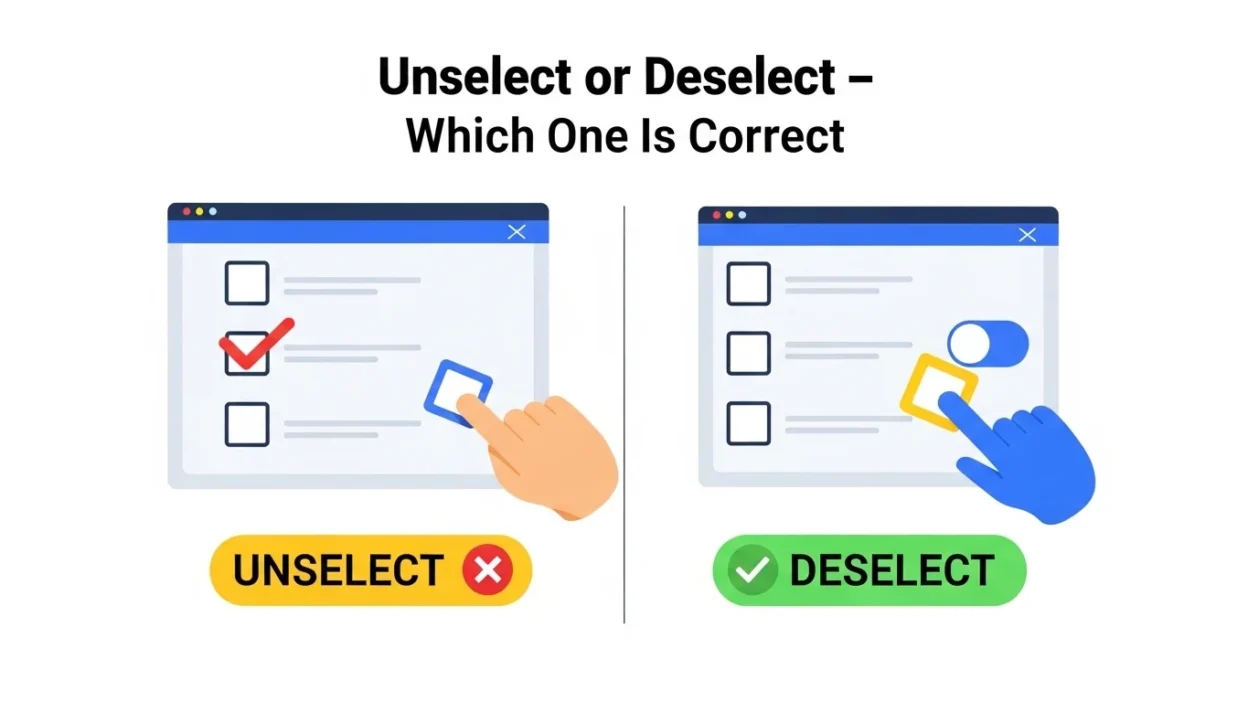
“Deselect” is the standard and widely accepted word for removing a selection, especially in computing, user interfaces, and forms.
“Unselect” exists but is far less common and often considered informal or less preferred.
In most situations particularly in technology, software instructions, and professional writing “deselect” is the better choice.
Meaning of Unselect and Deselect
Although both words describe removing a selection, their usage and acceptance differ.
What Does “Deselect” Mean?
Deselect means to remove something from a selected state.
It is widely used in:
- Software interfaces
- Graphic design tools
- Online forms
- Programming documentation
- Office applications
Examples:
- Click the checkbox again to deselect the option.
- Press Ctrl + D to deselect all highlighted items.
- Users can deselect files they no longer want to upload.
Because of its consistent usage in technology and professional writing, deselect is considered the correct and standard term.
What Does “Unselect” Mean?
Unselect technically means the same thing: to cancel or remove a selection.
However, the word is rarely used in formal or technical contexts.
Examples:
- You can unselect the item by clicking it again.
- The option becomes grey when you unselect it.
While understandable, many style guides and software manuals prefer deselect instead.
Why “Deselect” Is More Common
The prefix “de-” often indicates removal or reversal of an action.
Examples include:
- deactivate
- decode
- defrost
- detach
Similarly:
- select → deselect
Because this structure follows common English patterns, deselect feels more natural and professional, especially in technical writing.
“Un-” can also indicate reversal, but it is usually used with adjectives or states rather than actions.
Examples:
- unlocked
- undone
- unclear
For this reason, unselect sounds less natural to many native speakers.
Examples of Correct Usage
Here are common situations where the words appear.
Examples Using “Deselect”
- To remove the highlighted text, click deselect.
- Press Escape to deselect all items.
- Users can deselect files before uploading them.
- Click the selected image again to deselect it.
Examples Using “Unselect”
- If you change your mind, unselect the option.
- You can unselect the checkbox to disable notifications.
Even though these sentences are understandable, many editors would still replace unselect with deselect.
Comparison Table
| Feature | Unselect | Deselect |
| Meaning | Remove a selection | Remove a selection |
| Common Usage | Rare | Very common |
| Preferred in software | No | Yes |
| Formal writing | Not recommended | Recommended |
| Technical documentation | Rarely used | Standard |
| Clarity for readers | Acceptable | Clear and expected |
Conclusion: Both words share the same meaning, but deselect is the preferred and standard option.
Common Mistakes People Make
Understanding these mistakes can help you avoid confusion in writing and communication.
1. Using Unselect in Professional Writing
Many people write:
Incorrect:
- Please unselect the files before continuing.
Better:
- Please deselect the files before continuing.
2. Mixing Terms in the Same Document
Consistency matters in documentation.
Example mistake:
- Select the image.
- Then unselect the other images.
- Finally deselect the highlighted section.
Better:
Use deselect consistently.
3. Assuming Both Words Are Equally Standard
Although both words exist, deselect is far more accepted in English usage, particularly in software manuals, UI instructions, and help guides.
Where You Often See “Deselect”
You will frequently encounter this word in digital environments such as:
- Graphic design software
- Photo editing tools
- Microsoft Office
- Online forms
- Mobile apps
- Coding documentation
- Website dashboards
Examples:
- Deselect All
- Click outside the area to deselect
- Tap again to deselect
Because these platforms influence everyday language, deselect has become the dominant term globally.
American vs British English Differences
Unlike many English word pairs, there is no major difference between American and British English here.
Both varieties strongly prefer deselect.
Usage trends:
| Region | Preferred Word |
| American English | Deselect |
| British English | Deselect |
| Technical writing worldwide | Deselect |
“Unselect” might occasionally appear in casual conversation, but it is not region-specific and remains uncommon in both dialects.
When Is “Unselect” Acceptable?
While less common, unselect is not technically incorrect.
You might see it in:
- Casual speech
- Informal tutorials
- Older documentation
- Non-native English writing
For example:
- “Just unselect the checkbox if you don’t need the option.”
However, if you’re writing professionally especially for blogs, documentation, or SEO content deselect is still the safer and clearer choice.
FAQs
Is “unselect” a real word?
Yes, unselect exists in English, but it is rarely used. Most writers and software interfaces prefer deselect.
Which word is correct: unselect or deselect?
Both can technically work, but deselect is the correct and widely accepted choice, especially in technical or professional contexts.
Why do software programs use “deselect”?
Because the prefix “de-” naturally indicates reversing an action, making “deselect” clearer and more consistent with other English verbs.
Can I use “unselect” in casual conversation?
Yes. In casual speech, people may say unselect, and it will still be understood.
Is “deselect” used worldwide?
Yes. Both American and British English strongly favor “deselect.”
Which word should I use in tutorials or guides?
Always use deselect for clarity and professionalism.
Is there any difference in meaning?
No significant difference exists. Both words describe removing something from a selected state.
Summary
Understanding the difference between unselect and deselect is simple once you look at real-world usage.
Both words describe the action of removing a selection, but deselect is the standard and preferred term in modern English.
It appears in software interfaces, technical documentation, and professional writing across the world.
Although unselect is not completely wrong, it is far less common and may sound informal or outdated in many contexts.
For clarity, consistency, and professionalism especially in guides, blogs, and tutorials using “deselect” is the best choice.
Actionable Takeaway
If you’re writing instructions, documentation, or online content:
- Use deselect in almost every situation.
- Avoid unselect unless you’re quoting casual speech.
- Stay consistent throughout your writing.
This small choice improves clarity and aligns your writing with modern English usage and professional standards.