Sometimes you just want to make a clear, no-nonsense offer no back-and-forth, no pressure, no confusion. That’s exactly where the phrase “take it or leave it” comes in. It’s simple, direct, and widely used in everyday conversations, business deals, and even relationships.
But while it sounds straightforward, many people misuse it, misunderstand its tone, or apply it in the wrong context. In this guide, you’ll learn exactly what “take it or leave it” means, how to use it naturally, and when it might come across as too blunt.
Quick Answer
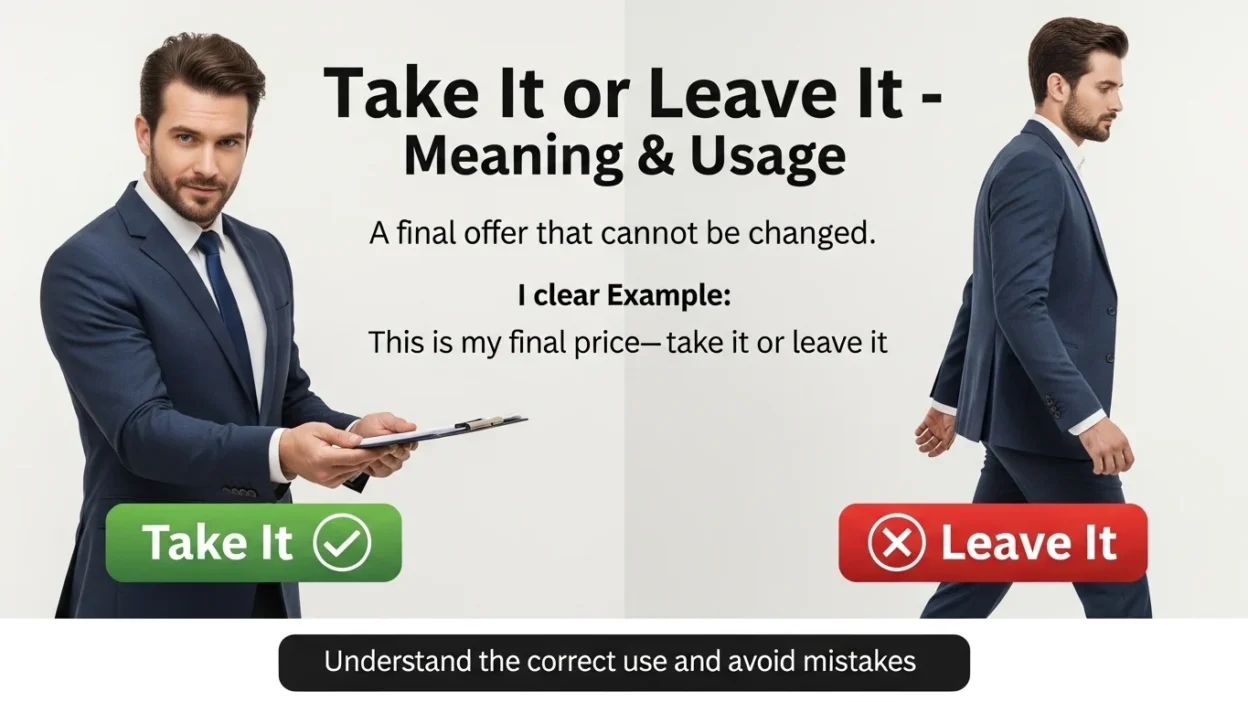
“Take it or leave it” means accepting an offer exactly as it is or rejecting it completely without negotiation or changes. It signals a firm, final decision.
What Does “Take It or Leave It” Mean?
The phrase “take it or leave it” is an idiom used to present something as non-negotiable. It tells the listener they have two options:
- Accept the offer as presented
- Reject it entirely
There is no room for bargaining, modification, or discussion.
Simple Definition
A firm statement indicating that terms are final and cannot be changed.
Tone Matters
Depending on how it’s said, the phrase can sound:
- Neutral (just stating facts)
- Confident (standing your ground)
- Rude (if used harshly)
That’s why context is everything.
Real-Life Examples of “Take It or Leave It”
Here are practical ways this phrase appears in daily life:
Everyday Conversations
- “That’s the last slice of pizza take it or leave it.”
- “I can give you a ride now, but I won’t wait. Take it or leave it.”
Workplace or Business
- “This is our final price take it or leave it.”
- “The deadline won’t change. Take it or leave it.”
Relationships
- “This is who I am take it or leave it.”
- “I need honesty. Take it or leave it.”
These examples show how the phrase can range from casual to serious depending on the situation.
When Should You Use “Take It or Leave It”?
This phrase works best when:
- You are done negotiating
- You want to set boundaries
- You need to be clear and direct
- The offer is non-flexible
Good Situations
- Final pricing in business
- Time-sensitive decisions
- Personal boundaries
Situations to Avoid
- Sensitive emotional conversations
- Customer service situations
- When flexibility would help
Using it in the wrong context can make you sound dismissive or aggressive.
Common Mistakes to Avoid
Even though the phrase is simple, people often misuse it. Here are common mistakes:
1. Using It Too Aggressively
Saying it with a harsh tone can come across as rude.
❌ “Take it or leave it I don’t care.”
✔ “That’s the best I can offer right now take it or leave it.”
2. Using It When Negotiation Is Expected
In situations like job offers or partnerships, this phrase can shut down opportunities.
3. Misunderstanding Its Finality
Once you say it, you’re signaling that:
- You won’t change your mind
- You won’t negotiate further
So use it carefully.
4. Overusing It
If you say it too often, people may see you as:
- Difficult
- Inflexible
- Uncooperative
Synonyms and Similar Phrases
Here are alternatives depending on tone and context:
- Final offer
- Non-negotiable
- No strings attached
- That’s the deal
- As is
- No changes allowed
Each carries a slightly different tone, so choose wisely.
Comparison Table: “Take It or Leave It” vs Similar Phrases
| Phrase | Meaning | Tone | Flexibility |
| Take it or leave it | Accept or reject with no changes | Direct | None |
| Final offer | Last possible proposal | Professional | Very low |
| Non-negotiable | Cannot be discussed or changed | Formal | None |
| As is | Offered in current condition | Neutral | Low |
| Best I can do | Slightly open but limited | Friendly | Some |
This table helps you pick the right phrase depending on how firm or polite you want to sound.
American vs British English Usage
The phrase “take it or leave it” is used in both American and British English without any difference in spelling or meaning.
Key Notes
- Widely understood in both regions
- Same tone and usage
- No variation like spelling changes
However, in British English, people may soften it slightly with phrases like:
- “That’s the offer, I’m afraid.”
- “That’s as far as I can go.”
This makes it sound more polite.
Why People Use “Take It or Leave It”
This phrase is powerful because it:
- Saves time
- Avoids long discussions
- Shows confidence
- Sets clear boundaries
But it also carries risk if used without empathy.
FAQs
1. Is “take it or leave it” rude?
It can sound rude if used harshly, but in the right tone, it’s simply direct and clear.
2. Can I use it in professional settings?
Yes, but use it carefully. It works best in final negotiations, not early discussions.
3. Is it formal or informal?
It is generally informal but can appear in semi-formal situations like business conversations.
4. What’s a polite alternative?
You can say:
- “That’s my final offer”
- “That’s the best I can do”
5. Does it always mean no negotiation?
Yes, it clearly signals that no changes will be made.
6. Can it be used in relationships?
Yes, especially when setting personal boundaries, but tone matters a lot.
7. Is it commonly used in daily speech?
Yes, it’s a very common idiom in everyday English.
8. What’s the difference between “final offer” and this phrase?
“Final offer” sounds more professional, while “take it or leave it” is more direct and conversational.
Summary
The phrase “take it or leave it” is a powerful and widely used idiom that expresses firmness and clarity. It tells someone that an offer is final, with no room for negotiation. While it’s effective in business, personal boundaries, and quick decisions, it must be used thoughtfully to avoid sounding harsh or dismissive.
Understanding when and how to use it can improve your communication skills significantly. Instead of overusing it, choose the right moment and tone to make your message clear without damaging relationships.
Actionable Takeaway
Next time you want to use “take it or leave it,” pause and ask yourself:
- Is this the final decision?
- Am I okay if the other person walks away?
- Can I say this in a respectful tone?
If the answer is yes, go ahead and use it confidently. If not, consider a softer alternative that keeps the conversation open.