If you’ve ever paused mid-sentence wondering whether to write pajamas or pyjamas, you’re definitely not alone. This small spelling difference confuses writers, students, and even native English speakers every day.
The good news? It’s not as complicated as it seems and once you understand it, you’ll never second-guess yourself again.
In this guide, we’ll break down the meaning, usage, and key differences between pajamas vs pyjamas in a simple, friendly way. If you’re writing for school, blogging, or just improving your English, this article will give you total clarity.
Quick Answer
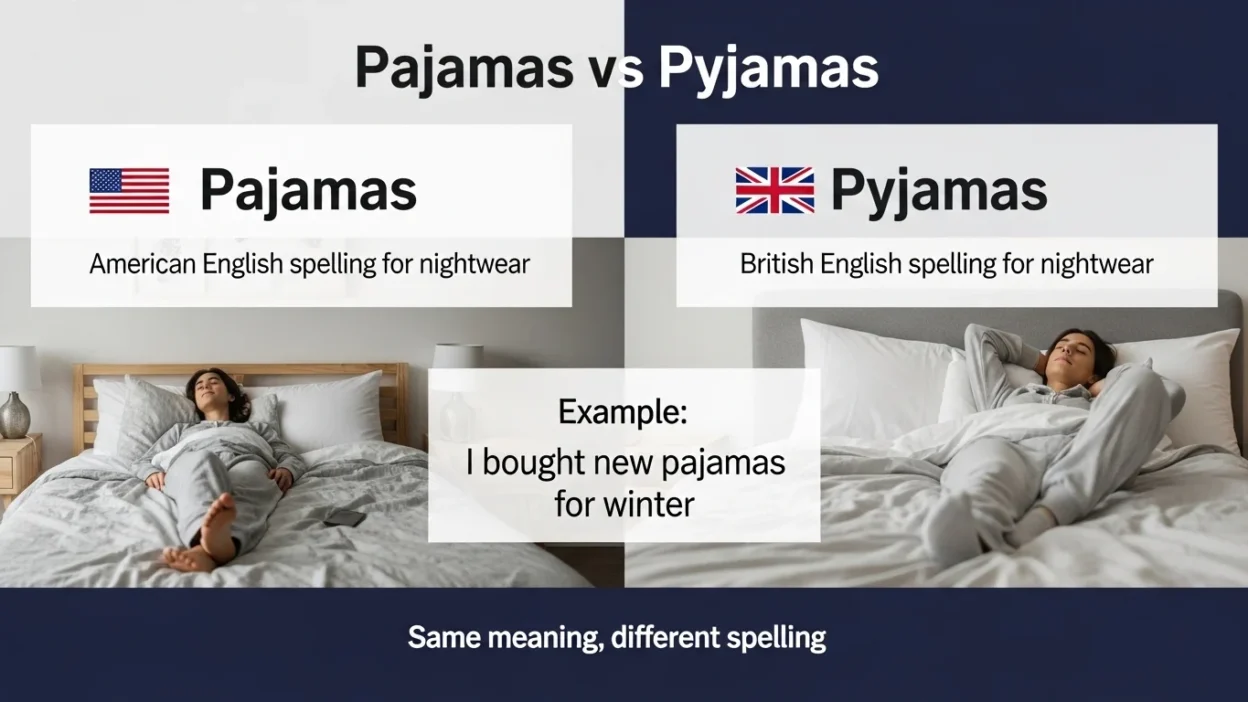
- “Pajamas” is the American English spelling
- “Pyjamas” is the British English spelling
- Both words mean the same thing: sleepwear or night clothes
👉 Choose the spelling based on your audience:
- Writing for the U.S.? Use pajamas
- Writing for the U.K., Australia, or elsewhere? Use pyjamas
What Does Pajamas/Pyjamas Mean?
Both pajamas and pyjamas refer to comfortable clothing worn for sleeping or lounging. Typically, they include a top and bottom set, but the term can also cover nightgowns or sleep shirts.
Simple Definition:
Pajamas/Pyjamas = Clothes worn for sleeping or relaxing at home
Example Sentences:
- I bought a new pair of pajamas for winter.
- She prefers cotton pyjamas because they feel soft.
- After work, he changed into his pajamas and relaxed.
Pajamas vs Pyjamas: Key Difference Explained
The only real difference between pajamas and pyjamas is spelling based on regional English.
American English vs British English
- American English simplifies many words → pajamas
- British English keeps traditional forms → pyjamas
This is similar to other word pairs like:
- color vs colour
- favorite vs favourite
- organize vs organise
So, pajamas vs pyjamas follows the same pattern of regional variation.
Comparison Table
| Feature | Pajamas | Pyjamas |
| Region | American English | British English |
| Meaning | Sleepwear | Sleepwear |
| Pronunciation | Same | Same |
| Usage Preference | USA, Canada | UK, Australia, India |
| Correctness | Correct | Correct |
✔ Both spellings are correct
✔ Meaning and pronunciation are identical
✔ Only the audience determines your choice
Why Do Two Spellings Exist?
The word actually comes from the Persian word “pāy-jāma”, meaning “leg garment.” It entered English through colonial influence in South Asia.
Over time:
- British English adopted “pyjamas”
- American English simplified it to “pajamas”
Language evolves differently in different regions, which is why both forms exist today.
Common Mistakes to Avoid
Even though the difference is simple, people often make small mistakes when using these words.
1. Mixing Spellings in One Article
❌ Incorrect:
I bought new pajamas, but my brother prefers pyjamas.
✔ Correct:
Stick to one version consistently based on your audience.
2. Thinking They Have Different Meanings
❌ Incorrect:
Pyjamas are formal sleepwear, pajamas are casual.
✔ Correct:
Both words mean exactly the same thing.
3. Using the Wrong Audience Style
❌ Writing for a UK audience but using “pajamas”
✔ Use “pyjamas” for British readers
4. Overthinking Pronunciation
Both are pronounced the same:
👉 puh-JAH-muhz
When Should You Use Pajamas or Pyjamas?
Here’s a simple rule to follow:
Use “Pajamas” if:
- Your audience is American
- You’re writing for U.S.-based websites
- You follow American spelling rules
Use “Pyjamas” if:
- Your audience is British or international
- You’re writing for UK, Australia, or India
- You follow British spelling conventions
💡 Pro Tip: If you’re unsure, check the website’s existing content style and stay consistent.
Related Words and Synonyms
- Sleepwear
- Nightwear
- Loungewear
- Bedclothes
- Night suit
- Sleeping clothes
These can be used naturally in your content to avoid repetition.
Real-Life Usage Examples
Here are some natural sentences showing both spellings:
American English:
- These silk pajamas are perfect for summer nights.
- Kids love fun and colorful pajamas.
British English:
- He packed his pyjamas for the trip.
- Warm pyjamas are essential in winter.
FAQs
1. Is pajamas or pyjamas correct?
Both are correct. The difference depends on whether you use American or British English.
2. Which spelling is more common?
Globally, pajamas is slightly more popular due to American media influence, but pyjamas is standard in British regions.
3. Do they have different meanings?
No, both words mean the same thing: sleepwear.
4. How do you pronounce pajamas and pyjamas?
Both are pronounced the same: puh-JAH-muhz.
5. Should I use pajamas in formal writing?
Yes, as long as it matches your audience’s language style.
6. Why does British English use “py” instead of “pa”?
British English often preserves older or traditional spellings, while American English simplifies them.
7. Is one more professional than the other?
No. Both are equally correct and professional when used appropriately.
8. Can I use both in the same article?
It’s best to stick to one spelling for consistency and clarity.
Summary
Understanding pajamas vs pyjamas is actually very simple once you know the rule: it’s all about American vs British English. Both words mean the same thing, are pronounced the same way, and are equally correct. The only difference lies in regional preference and spelling style.
When writing, always think about your audience. If you’re targeting readers in the United States, go with pajamas. If your audience is in the UK or other British-influenced regions, pyjamas is the better choice. Consistency is key stick to one version throughout your content for a clean and professional look.
Actionable Takeaway
👉 Decide your audience first, then choose the spelling accordingly
👉 Stay consistent throughout your writing
👉 Don’t overthink it both are correct and widely accepted

Edward Axel is the administrator of SyntaxlyHub, responsible for overseeing site operations, content management, and technical performance. He ensures accuracy, consistency, and smooth functionality while supporting the team in delivering reliable, high-quality grammar resources and a user-friendly learning experience for readers worldwide.