Have you ever paused mid-sentence and wondered, “Is it momma or mama?” You’re not alone. These two spellings look almost identical, sound similar, and both feel warm and affectionate.
But depending on where you are, who you’re talking to, and what you’re writing, the correct choice can subtly change.
In this guide, you’ll discover the real difference between momma and mama, when to use each one, common mistakes to avoid, and how American vs British English plays a role.
Let’s clear up the confusion in a simple, friendly way.
Quick Answer:
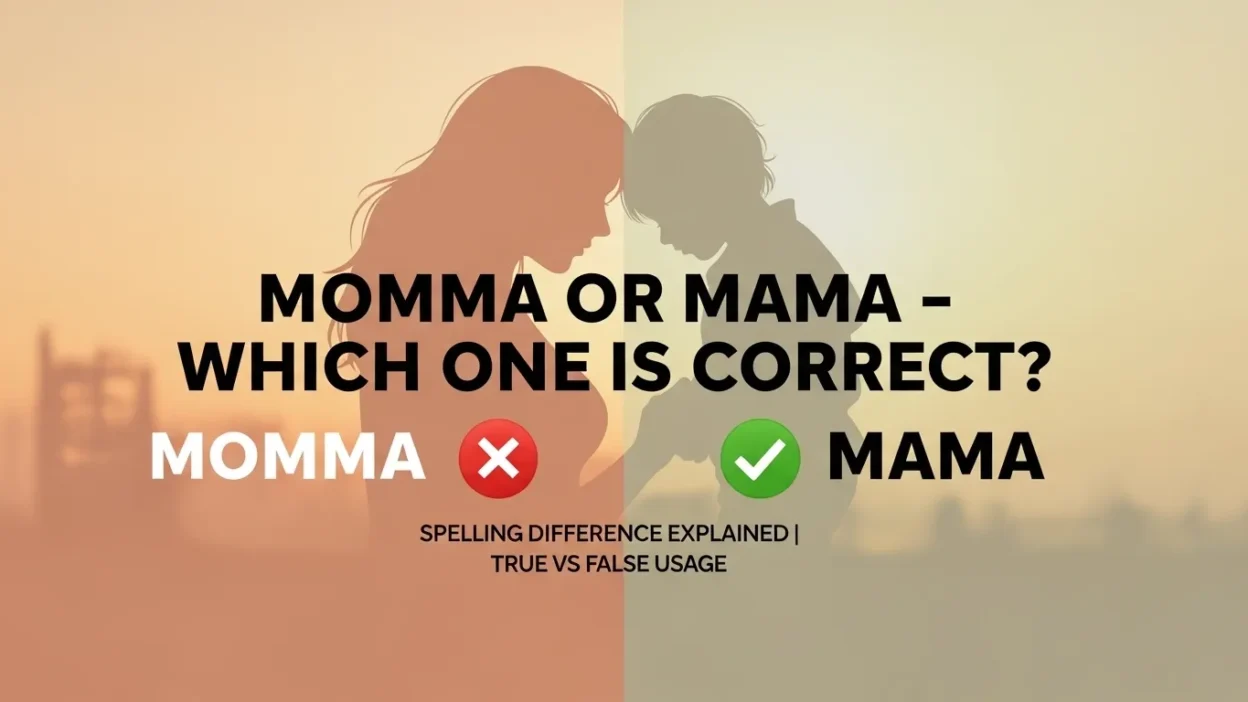
Both momma and mama are informal, affectionate words for “mother.”
- Mama is the more standard and widely accepted spelling.
- Momma is a more phonetic, Southern American variation.
- In formal writing, neither is preferred use mother instead.
If you’re unsure, “mama” is usually the safer choice.
What Does “Mama” Mean?
Mama is an informal term for “mother.” It’s often one of the first words a baby says. The word exists across many languages and cultures, making it universally recognizable.
Common Uses of “Mama”
- A young child addressing their mother
- A term of endearment in families
- Cultural expressions (e.g., songs, stories)
- Playful or affectionate adult speech
Examples:
- “Mama, can you help me?”
- “I love you, Mama.”
- “She’s a proud mama of three.”
Tone and Feeling
“Mama” feels:
- Warm
- Loving
- Childlike
- Nurturing
It’s common in American English and is also understood in British English, though less frequently used by adults in the UK.
What Does “Momma” Mean?
Momma has the same meaning as “mama.” The difference lies mainly in spelling and regional preference.
“Momma” reflects how some Americans especially in the Southern United States pronounce “mama.” It visually emphasizes the stronger “mom” sound.
Common Uses of “Momma”
- Southern American dialect
- Casual storytelling
- Emotional or nostalgic writing
Examples:
- “My momma always said to be kind.”
- “Momma knows best.”
- “That’s what momma used to cook.”
Tone and Feeling
“Momma” feels:
- Folksy
- Southern
- Personal
- Nostalgic
It’s less common in British English and may look informal or dialect-specific outside the U.S.
Momma vs Mama: Side-by-Side Comparison
| Feature | Mama | Momma |
| Meaning | Informal word for mother | Same meaning |
| Formality | Informal | Informal |
| Common Region | Widely used globally | Mainly American (especially Southern U.S.) |
| Spelling Style | Standard informal spelling | Phonetic variation |
| Safe for General Writing? | Yes | Only in informal or regional context |
American vs British English Differences
In American English, both “mama” and “momma” are used, but:
- “Mama” is more universal.
- “Momma” is strongly associated with Southern American culture.
In British English:
- “Mum” is the standard informal term.
- “Mama” may appear in baby talk.
- “Momma” is very rare.
If you’re writing for an international audience, stick with mama or use mother for formal content.
When Should You Use “Mama”?
Use mama when:
- Writing children’s content
- Expressing affection
- Sharing heartfelt stories
- Writing songs or poems
- Addressing your mother lovingly
It works well in blogs, personal essays, and social media captions.
Example in a sentence:
“Being a mama has changed my life in the most beautiful way.”
When Should You Use “Momma”?
Use momma when:
- Writing in Southern dialect
- Quoting someone authentically
- Creating a nostalgic tone
- Telling a personal story rooted in regional culture
Example in a sentence:
“Momma always said hard work pays off.”
If you’re writing SEO content or professional copy, “mama” is typically the better option.
Common Mistakes to Avoid
Here are a few common spelling and usage mistakes people make:
1. Using “Momma” in Formal Writing
Incorrect:
“My momma attended the conference.”
Correct:
“My mother attended the conference.”
2. Mixing Regional Tone Unintentionally
If your content is neutral or global, using “momma” might feel out of place.
3. Confusing “Mama” With “Mamma”
“Mamma” is a less common spelling but appears in British English and in titles like:
- Mamma Mia!
However, “mamma” isn’t standard in modern everyday writing.
4. Overusing Informal Terms
In academic, business, or professional communication, always use:
- Mother
- Parent
Not “mama” or “momma.”
Is One More Correct Than the Other?
Grammatically, both are correct informal spellings.
However:
- Mama = standard informal spelling
- Momma = dialect-based informal spelling
If you’re writing SEO content targeting a broad audience, “mama” generally performs better due to wider search recognition.
Cultural and Emotional Context
Across cultures, variations of “mama” exist:
- Mama (English, Spanish)
- Maman (French)
- Mama (many African and Asian languages)
It’s one of the most universal words in human language, often among a baby’s first spoken words.
“Momma,” on the other hand, carries a distinctly American warmth. It often appears in country songs, rural storytelling, and family-centered narratives.
Real-Life Example Sentences
Here’s how both words work naturally in context:
With “Mama”:
- “Mama, I missed you.”
- “She’s a new mama learning every day.”
- “That’s my strong mama.”
With “Momma”:
- “Momma raised us right.”
- “I’m going back home to see momma.”
- “Listen to your momma.”
Notice the emotional tone remains similar only the regional flavor shifts.
FAQs
1. Is “momma” grammatically correct?
Yes, but it’s informal and region-specific. It’s more common in American Southern dialect.
2. Which spelling is more common?
“Mama” is more widely used and globally recognized.
3. Is “momma” only American?
Mostly, yes. It’s rarely used in British English.
4. Can I use “mama” in professional writing?
It’s best to use “mother” in professional or formal contexts.
5. Why do babies say “mama” first?
The “ma” sound is one of the easiest syllables for babies to pronounce.
6. Is “mamma” wrong?
Not wrong, but less common today. It appears more in older British usage and titles like Mamma Mia!.
7. Does spelling affect SEO?
Yes. “Mama” generally has broader search appeal, while “momma” may attract niche or regional traffic.
8. Can adults say “mama”?
Absolutely. Many adults use it affectionately, especially in family settings.
Final Thoughts:
Choosing between momma or mama isn’t about right or wrong it’s about context. Both words express love, warmth, and connection. The difference lies in regional tone and spelling preference.
“Mama” is more universal and safe for most writing situations, while “momma” adds a personal, Southern flavor.
If you’re writing for a broad audience or optimizing content for search engines, stick with mama. If you’re telling a heartfelt story rooted in American tradition, “momma” can feel more authentic.
Understanding this subtle difference helps you write with clarity, intention, and emotional impact.
Actionable Takeaway
When deciding between momma or mama:
- Choose mama for universal appeal and SEO.
- Use momma for regional or nostalgic tone.
- Use mother for formal contexts.
- Stay consistent within your writing.
Small spelling choices can shape tone more than you think.

Edward Axel is the administrator of SyntaxlyHub, responsible for overseeing site operations, content management, and technical performance. He ensures accuracy, consistency, and smooth functionality while supporting the team in delivering reliable, high-quality grammar resources and a user-friendly learning experience for readers worldwide.