When you want to end a message warmly and leave someone with a positive feeling, few phrases work better than “looking forward to seeing you.”
It sounds polite, genuine, and friendly, perfect for emails, texts, invitations, and professional communication.
But many people still wonder: Is it grammatically correct? When should I use it? Are there better alternatives?
This guide explains everything you need to know about looking forward to seeing you, from its exact meaning to common mistakes and real-life examples.
If you’re writing a formal email, confirming a meeting, or messaging a friend, you’ll learn how to use this phrase naturally and confidently.
Quick Answer:
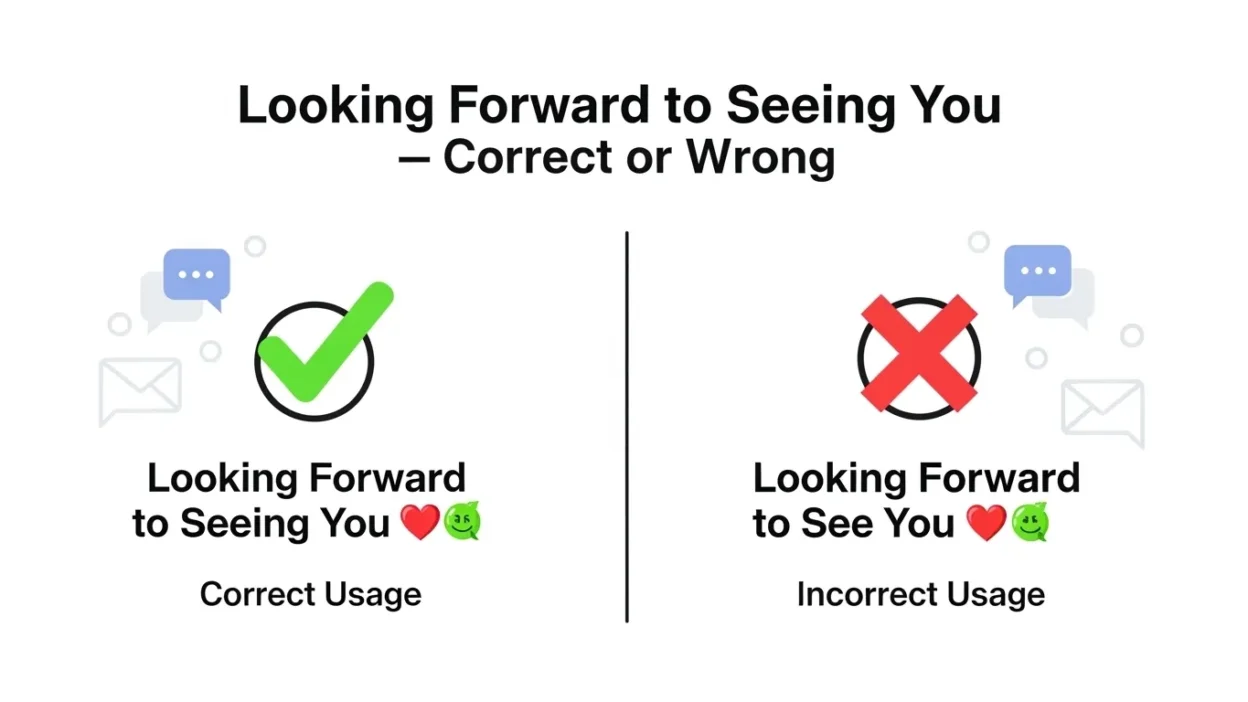
Yes. “Looking forward to seeing you” is grammatically correct and widely used in both formal and informal English. It’s a polite closing phrase that expresses anticipation or excitement about a future meeting. The verb after to must be in -ing form (“seeing,” not “see”).
What Does “Looking Forward to Seeing You” Mean?
The phrase means you are happy or excited about meeting someone in the future. It signals warmth, enthusiasm, and positivity. Depending on tone and context, it can sound:
- Friendly and personal
- Professional and courteous
- Romantic or affectionate
- Formal yet welcoming
At its core, it communicates emotional anticipation. It reassures the other person that their presence matters and that the upcoming interaction is valued.
Simple definition:
A polite expression used to show you’re pleased about meeting someone soon.
Why This Phrase Works So Well
People respond positively to language that feels welcoming and sincere. This phrase succeeds because it combines three powerful communication elements:
- Future orientation – focuses on an upcoming interaction
- Positive emotion – expresses anticipation
- Personal connection – centers on the other person
That combination makes it ideal for emails, invitations, business messages, and social conversations.
Grammar Breakdown: Why It Uses “Seeing,” Not “See”
Many learners mistakenly write “looking forward to see you.” That’s incorrect because “to” here is a preposition, not part of an infinitive verb.
Rule:
- After a preposition, verbs take -ing form.
Correct examples:
- Looking forward to meeting you
- Looking forward to working together
- Looking forward to hearing from you
Incorrect:
- Looking forward to meet you
- Looking forward to see you
Memory tip:
If you can replace to with toward, it’s a preposition → use -ing.
When to Use “Looking Forward to Seeing You”
This phrase fits many real-life situations. Here’s where it sounds most natural:
Professional settings
- Email confirmations
- Client meetings
- Interview invitations
- Event registrations
Personal communication
- Meeting friends
- Family visits
- Dates
- Reunions
Formal occasions
- Weddings
- Conferences
- Official events
It works because it’s neutral yet warm never too casual, never too stiff.
Real-Life Examples You Can Copy
Here are natural examples you can use or adapt:
Professional
- I’ve scheduled our meeting for Tuesday at 10 AM. Looking forward to seeing you.
- Thank you for confirming your attendance. We’re looking forward to seeing you at the seminar.
- It was great speaking today. Looking forward to seeing you next week.
Friendly
- Safe travels! Looking forward to seeing you soon.
- I miss you already looking forward to seeing you this weekend.
- Dinner is booked. Looking forward to seeing you!
Formal
- We appreciate your participation and are looking forward to seeing you at the conference.
Tone Variations and Subtle Differences
Small wording changes can slightly shift tone and meaning.
| Phrase | Tone | Best Use |
| Looking forward to seeing you | Warm & neutral | General use |
| I’m looking forward to seeing you | Personal | Emails, messages |
| We’re looking forward to seeing you | Inclusive | Business or events |
| Really looking forward to seeing you | Enthusiastic | Friends or close contacts |
| Looking forward to seeing you soon | Friendly anticipation | Informal or semi-formal |
Common Mistakes to Avoid
Even fluent speakers sometimes misuse this phrase. Here are the most frequent errors:
1. Using the wrong verb form
❌ Looking forward to see you
✔ Looking forward to seeing you
2. Adding unnecessary words
❌ I am looking forward for seeing you
✔ I am looking forward to seeing you
3. Overusing it
Repeating the phrase in every email can sound robotic. Mix in alternatives.
4. Using it in the wrong context
Don’t use it if you’re unsure you’ll meet. For uncertain plans, say:
- Hope to see you
- Maybe we’ll meet soon
Best Alternatives to “Looking Forward to Seeing You”
Variety keeps your communication natural. Try these substitutes depending on tone:
Professional alternatives
- I look forward to meeting you
- I anticipate our meeting
- I’m eager to connect
Friendly alternatives
- Can’t wait to see you
- Excited to catch up
- See you soon
Formal alternatives
- We anticipate your visit
- We look forward to your presence
- We await your arrival
American vs British English Usage
Good news: There’s no major difference between American and British English for this phrase. Both use it widely and correctly. However, subtle stylistic preferences exist:
- American English often uses contractions:
I’m looking forward to seeing you. - British English sometimes prefers slightly more formal tone in professional writing:
I look forward to seeing you.
Both are correct; choice depends on context and personal style.
When It Might Sound Too Formal (and What to Say Instead)
In casual chats, the phrase can sometimes sound slightly stiff. If you’re texting friends, consider:
- See you soon!
- Can’t wait!
- Catch you later!
- So excited to see you!
Choosing the right tone shows emotional intelligence and awareness of your relationship with the reader.
Cultural & Communication Insight
This phrase is popular worldwide because it balances politeness + warmth. In professional cultures that value courtesy such as business communication, academic correspondence, and international relations it helps create a positive impression without sounding overly emotional.
In customer service, hospitality, and networking, it’s especially effective because it subtly reassures the recipient that they’re welcome and expected.
FAQs
1. Is it formal or informal?
It’s both. The phrase is neutral enough for business emails yet warm enough for personal messages.
2. Can I say it at the beginning of a sentence?
Yes. Example: Looking forward to seeing you tomorrow.
3. Is “I look forward to seeing you” more formal?
Yes. Using the full sentence without contraction sounds slightly more professional.
4. Can I use it in job interview emails?
Absolutely. It’s commonly used to confirm interview appointments politely.
5. Is it okay to use in text messages?
Yes, but for very casual chats, shorter alternatives may sound more natural.
6. What’s the difference between “meeting you” and “seeing you”?
Meeting often suggests a first meeting. Seeing works for both first-time and repeat meetings.
7. Can it sound romantic?
It can, depending on tone and context. With close partners, it often conveys affection.
8. Is it okay to omit “I am”?
Yes. Shortened forms like Looking forward to seeing you are standard in emails and messages.
Expert Communication Tips (E-E-A-T Focus)
Language experts and professional writers often recommend phrases like this because they:
- Show courtesy without exaggeration
- Strengthen rapport
- Reduce perceived distance in written communication
- Create positive closing impressions
To sound authentic, match the phrase to your relationship and context. Tone alignment is key to credibility and trust.
Summary
“Looking forward to seeing you” is a versatile, grammatically correct phrase used to express anticipation about meeting someone.
It works across professional, social, and formal contexts because it combines warmth with politeness. The key grammar rule is simple: always use the -ing form after “to,” since it functions as a preposition.
Using this phrase effectively can improve your communication style, help you sound more friendly and professional, and leave readers with a positive impression.
While it’s widely accepted in both American and British English, adjusting tone and choosing alternatives when needed will make your writing feel more natural and engaging.
Actionable takeaway:
Before sending your next message, ask yourself: What tone do I want? If you want polite warmth, end with “looking forward to seeing you.” If you want casual excitement, choose a friendlier alternative. Matching tone to context is the secret to confident communication.

Edward Axel is the administrator of SyntaxlyHub, responsible for overseeing site operations, content management, and technical performance. He ensures accuracy, consistency, and smooth functionality while supporting the team in delivering reliable, high-quality grammar resources and a user-friendly learning experience for readers worldwide.