If you’ve ever paused mid-sentence wondering whether to write forgo or forego, you’re not alone. These two words look nearly identical, sound similar, and often confuse even confident writers. But here’s the good news: once you understand their meanings and usage, the confusion disappears for good.
In this guide, you’ll learn the exact difference between forgo and forego, when to use each one, and how to avoid common mistakes. Whether you’re writing professionally, studying English, this clear breakdown will help you use both words with confidence.
Quick Answer
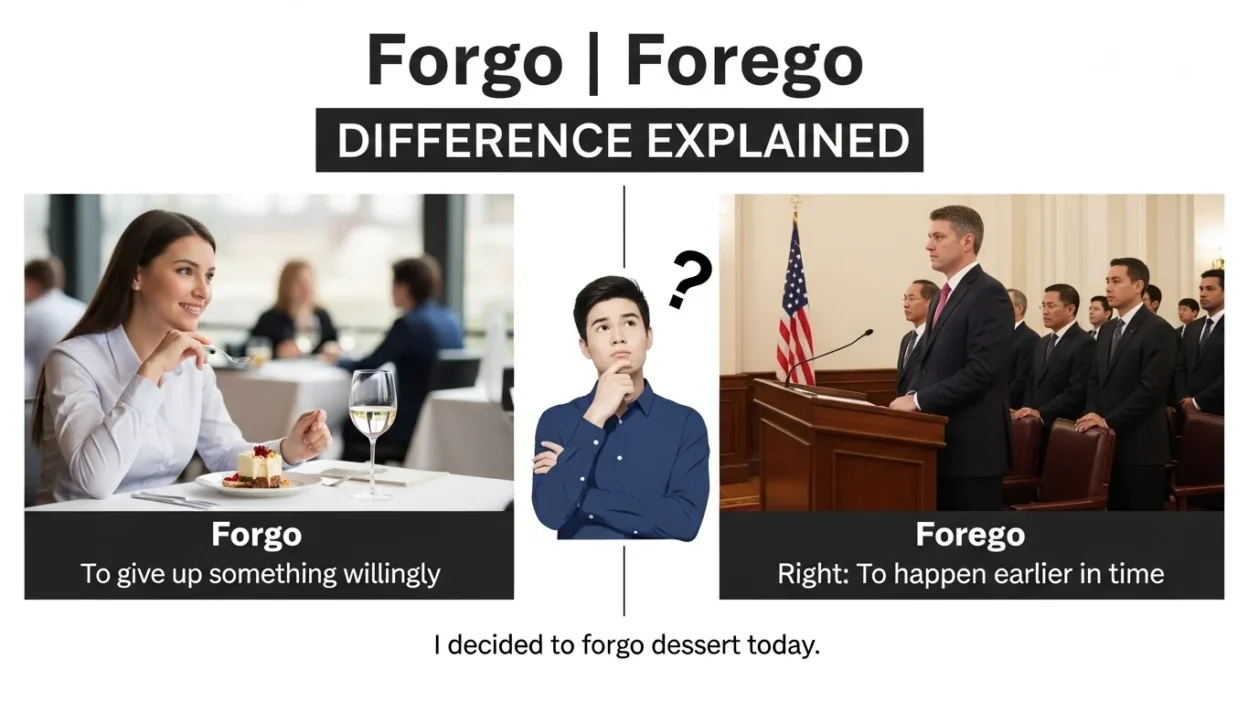
- Forgo = to give up, do without, or sacrifice something
- Forego = to go before something or come earlier (less commonly used)
👉 In modern usage, forgo is far more common, especially when talking about skipping or giving something up.
What Does Forgo Mean?
Forgo means to decide not to have or do something. It implies a conscious choice or sacrifice.
Examples of Forgo
- I decided to forgo dessert to stay healthy.
- She chose to forgo the job offer for a better opportunity.
- They had to forgo their vacation due to budget constraints.
Easy Memory Tip
Think: “Forgo = Let go”
Both involve giving something up.
What Does Forego Mean?
Forego (sometimes written as fore-go) means to go before or to precede something. It’s more formal and less commonly used in everyday writing.
Examples of Forego
- The introduction will forego the main discussion.
- A brief summary will forego the detailed analysis.
👉 Note: In many modern contexts, people mistakenly use forego when they actually mean forgo.
Forgo or Forego: Key Differences
| Feature | Forgo | Forego |
| Meaning | Give up or do without | Go before or precede |
| Usage | Very common | Rare and formal |
| Context | Everyday decisions | Structured writing |
| Example | Forgo dessert | Forego the introduction |
Common Mistakes to Avoid
Many writers mix up these two words because of their spelling similarity. Here are the most common errors:
1. Using “forego” instead of “forgo”
❌ I will forego coffee today
✔️ I will forgo coffee today
👉 This is the most frequent mistake.
2. Assuming both words mean the same
They don’t. While some dictionaries accept overlap in casual use, it’s best to keep their meanings distinct for clarity and professionalism.
3. Overusing “forego”
Unless you’re writing formal or academic content, you’ll rarely need forego.
American vs British English Usage
- American English: Strong preference for forgo when meaning “to give up”
- British English: Also uses forgo, though forego occasionally appears in formal writing
👉 In both variants, forgo is the safer and more widely accepted choice for everyday communication.
When Should You Use Forgo?
Use forgo when:
- You’re talking about sacrifice or choice
- You mean skip or avoid something
- You want clear, modern English
Examples in Real Context
- He decided to forgo higher education and start a business.
- We must forgo unnecessary expenses this month.
When Should You Use Forego?
Use forego when:
- You mean something comes before another
- You’re writing in a formal or structured context
- You want a more traditional tone
Example in Context
- The summary will forego the conclusion section.
FAQs
1. Are forgo and forego interchangeable?
Not exactly. While sometimes used interchangeably, they have different meanings and should ideally be used correctly.
2. Which is more common in modern English?
Forgo is far more common, especially in everyday writing.
3. Is “forego” wrong when meaning “give up”?
It’s not always wrong, but it’s often considered a mistake in modern usage.
4. How can I easily remember the difference?
Use the trick:
- Forgo = Give up
- Forego = Before
5. Do native speakers confuse these words?
Yes, even native speakers mix them up because of their similar spelling.
6. Can I avoid using “forego” altogether?
Yes, in most cases. You can usually rephrase your sentence for clarity.
7. Is “forego” outdated?
Not entirely, but it’s less commonly used and often replaced with simpler alternatives.
8. Which should I use in formal writing?
Use:
- Forgo for “give up”
- Forego only when meaning “precede”
Final Summary
Understanding the difference between forgo and forego is simpler than it first appears. Forgo is your go-to word when you mean giving something up, making a sacrifice, or choosing not to have something.
It’s modern, widely used, and clear in meaning. On the other hand, forego is more formal and refers to something that comes before another, making it far less common in everyday writing.
By keeping this distinction in mind, you’ll not only improve your grammar but also enhance the clarity and professionalism of your writing. If you’re crafting content, writing emails, or preparing academic work, choosing the right word makes a strong impression.
Actionable Takeaway
Next time you’re unsure, ask yourself:
👉 “Am I giving something up?” → Use forgo
👉 “Am I talking about something coming before?” → Use forego
Stick with this simple rule, and you’ll never confuse them again.