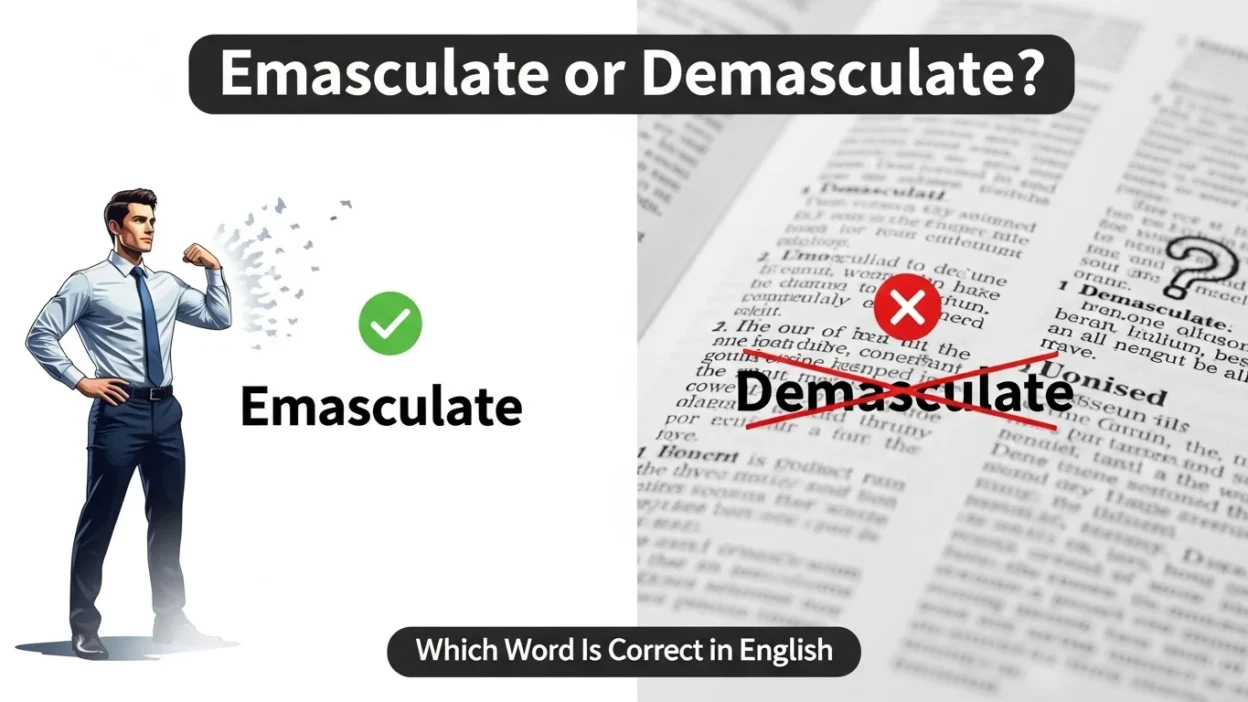
Language can sometimes be confusing, especially when two words sound similar but one may not actually exist in standard usage. One such confusion is “emasculate or demasculate.” Many writers, students, and content creators wonder whether both words are correct or if one is simply a mistake.
If you’ve ever hesitated while writing this word, you’re not alone. In this guide, we’ll clearly explain the meaning, correct usage, examples, and common mistakes related to these terms. By the end, you’ll confidently know which word to use and why.
Quick Answer
“Emasculate” is the correct and standard English word.
“Demasculate” is not recognized in modern standard English dictionaries and is generally considered incorrect or extremely rare.
Use emasculate when you want to describe:
- Weakening someone’s strength, power, or confidence
- Making something less effective
- Historically, removing male characteristics or authority
Avoid using demasculate, as it is typically treated as a misspelling or misunderstanding of “emasculate.”
Meaning of “Emasculate”
The word emasculate comes from the Latin word emasculare, which means to deprive one of strength or masculinity.
Today, the meaning is often used figuratively, not literally.
Common meanings
- To weaken or reduce strength or effectiveness
- To undermine someone’s confidence or authority
- Historically: to castrate or remove male attributes
Example Sentences
- The new regulations could emasculate the power of local governments.
- Public criticism can sometimes emasculate a leader’s authority.
- The edited version of the speech emasculated its original impact.
In modern writing, the word is usually used to describe loss of power, strength, or influence, rather than physical meaning.
What About “Demasculate”?
Many people assume that demasculate should exist because English often adds “de-” to reverse meaning (like deactivate or defrost).
However, “demasculate” is not accepted as a standard English word.
Why the confusion happens
Several factors lead to this mistake:
- The prefix “de-” suggests removal or reversal
- People mishear emasculate and add a “d” sound
- Autocorrect or typing errors
- Assumption that “de + masculine” forms “demasculate”
But linguistically, the word already contains the meaning of removal, so adding “de” is unnecessary.
Emasculate vs Demasculate (Comparison)
| Feature | Emasculate | Demasculate |
| Correct English Word | Yes | No |
| Dictionary Recognition | Yes | Rare/Not accepted |
| Meaning | To weaken or deprive of strength | Not recognized |
| Common Usage | Formal and figurative writing | Usually considered a mistake |
| Recommended for Writing | Yes | Avoid |
Key takeaway:
Always use emasculate in professional, academic, or online writing.
Common Mistakes People Make
Writers frequently make small errors when using this word. Here are the most common ones.
1. Writing “Demasculate”
Incorrect example:
- The policy will demasculate the organization.
Correct version:
- The policy will emasculate the organization.
2. Using It Too Literally
In modern writing, the word is usually metaphorical, referring to power or authority.
Example:
- Harsh criticism can emasculate a manager’s leadership.
3. Confusing It with Similar Words
People sometimes mix emasculate with words like:
- Undermine
- Weaken
- Diminish
- Disempower
These can be synonyms depending on context.
Synonyms and Related Words
To improve writing and avoid repetition, you can use similar words depending on the context.
Strong Synonyms
- Weaken
- Undermine
- Diminish
- Reduce
- Neutralize
Related Phrases
- Loss of authority
- Reduction of power
- Weakening influence
- Destroy confidence
- Remove effectiveness
Using variations helps keep your writing natural and engaging for readers and search engines.
American vs British English Usage
One interesting aspect is that both American and British English use the same word: “emasculate.”
There is no spelling difference between the two dialects.
| Language Style | Correct Word |
| American English | Emasculate |
| British English | Emasculate |
Unlike words like color/colour or organize/organise, this term remains the same in both forms of English.
When Should You Use “Emasculate”?
The word works best in formal or analytical writing.
Good contexts
- Academic discussions
- Political commentary
- Leadership analysis
- Business writing
- Opinion articles
Example contexts
- Policy debates
- Leadership criticism
- Organizational changes
- Historical discussions
Example sentence:
- Some analysts argue the reforms may emasculate the authority of the central committee.
When You Should Avoid the Word
Although the word is correct, it can sometimes sound strong or sensitive.
Avoid using it in:
- Casual conversation
- Sensitive personal discussions
- Informal writing
In those cases, softer words like weaken or reduce may work better.
Practical Writing Tips
Here are a few helpful tips to use the word correctly.
Keep it metaphorical
Most modern usage refers to power or authority, not gender.
Use it sparingly
Because the word is strong, overusing it can make writing feel dramatic.
Replace when needed
If the tone feels too harsh, try alternatives like:
- weaken
- undermine
- diminish
FAQs
1. Is “demasculate” a real word?
No. Demasculate is not recognized in standard English dictionaries. It is generally considered incorrect.
2. What does emasculate mean?
It means to weaken, reduce power, or undermine authority. Historically, it referred to removing male characteristics.
3. Why do people say demasculate?
The confusion comes from the prefix “de-”, which often indicates removal. However, the word emasculate already contains that meaning.
4. Is emasculate offensive?
It can be strong or sensitive depending on context, especially if used toward individuals. In most writing, it is used metaphorically.
5. Is emasculate used in modern English?
Yes. It appears in journalism, academic writing, politics, and analysis.
6. Are there synonyms for emasculate?
Yes. Common alternatives include weaken, undermine, diminish, reduce, and neutralize.
7. Does British English use demasculate?
No. Both British and American English use “emasculate.”
8. Can emasculate describe policies or systems?
Yes. It is commonly used to describe laws, reforms, or decisions that weaken authority or effectiveness.
Summary
Understanding the difference between emasculate or demasculate is actually quite simple once you look at how English uses the word.
Emasculate is the correct, dictionary-recognized term used to describe weakening power, authority, or effectiveness. It appears in formal writing, journalism, and academic discussions.
On the other hand, demasculate is not a standard English word. Most experts consider it a spelling mistake or misunderstanding of the correct form. To keep your writing professional and clear, it’s best to always choose emasculate.
Actionable Takeaway
Whenever you are unsure which term to use, remember this simple rule:
Use “emasculate.” Avoid “demasculate.”
If your sentence describes weakening authority, reducing effectiveness, or undermining power, the correct word will always be emasculate.
Mastering small distinctions like this can make your writing more accurate, credible, and professional.