When people talk about where they live, you’ll often hear words like city, town, and village used almost interchangeably. But are they really the same? If you’ve ever wondered what separates a busy city from a quiet village or where a town fits in you’re not alone.
In this guide, we’ll break down the differences between city vs town vs village in the simplest way possible. If you’re writing, studying, or just curious, you’ll walk away with clear definitions, practical examples, and confidence in using each term correctly.
Quick Answer
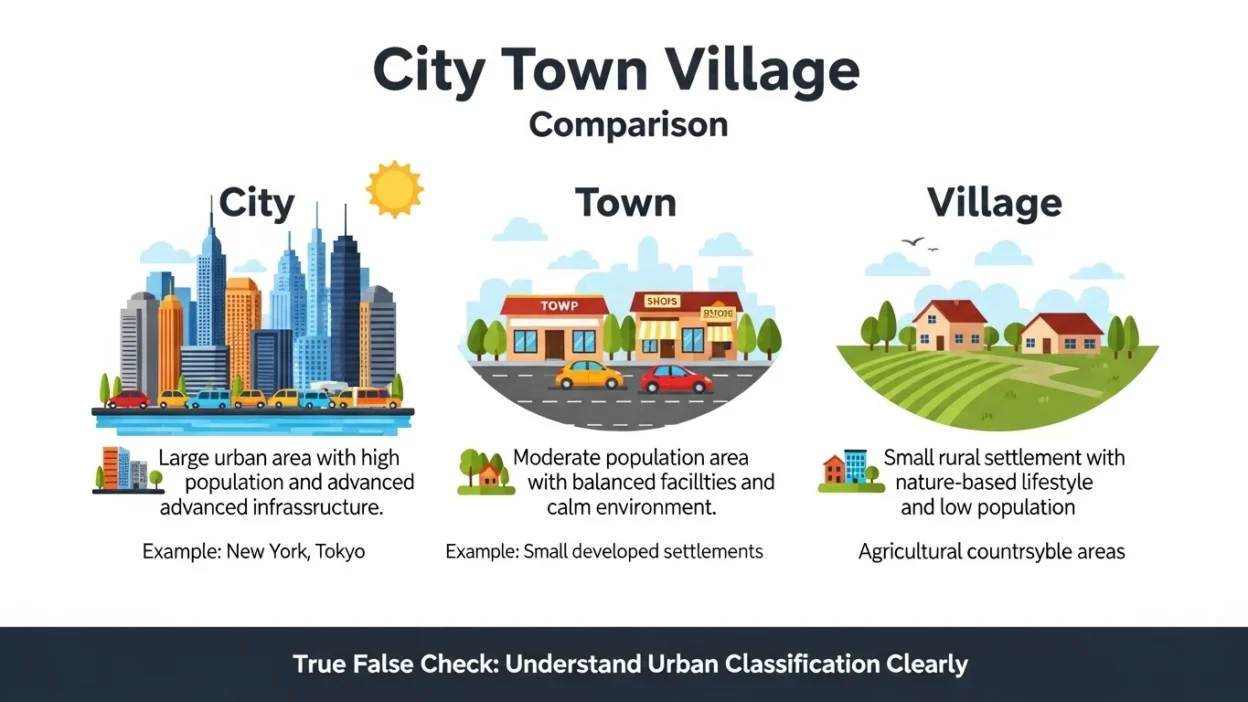
- City: A large, densely populated urban area with advanced infrastructure and services.
- Town: A medium-sized settlement, smaller than a city but larger than a village.
- Village: A small, rural community with fewer people and limited facilities.
👉 The main difference lies in population size, infrastructure, and administrative status.
What is a City?
A city is a large and highly developed urban area. It usually has a high population density, modern infrastructure, and a wide range of services.
Key Features of a City
- Large population (often hundreds of thousands or millions)
- Advanced transport systems (buses, trains, airports)
- Hospitals, universities, shopping centers
- Strong economy and job opportunities
- Official administrative status in many countries
Example
- Karachi is a city with millions of residents, major industries, and modern facilities.
What is a Town?
A town is smaller than a city but larger than a village. It acts as a bridge between rural and urban life.
Key Features of a Town
- Moderate population size
- Basic infrastructure (schools, markets, small hospitals)
- Less crowded than cities
- Often serves nearby villages
Example
- A place like Gujrat (in Pakistan) can be considered a town due to its moderate population and facilities.
What is a Village?
A village is a small rural settlement, usually surrounded by farmland or natural landscapes.
Key Features of a Village
- Small population
- Limited services (few shops, basic schools)
- Close-knit community
- Agriculture-based lifestyle
Example
- A small farming community with a few hundred residents is typically a village.
City vs Town vs Village: Comparison Table
| Feature | City | Town | Village |
| Population | Very large | Medium | Small |
| Infrastructure | Advanced | Moderate | Limited |
| Lifestyle | Fast-paced | Balanced | Slow and simple |
| Economy | Industrial & commercial | Mixed | Agriculture-based |
| Facilities | Extensive | Basic to moderate | Minimal |
| Administration | Official city status | Sometimes official | Often informal/local |
Key Differences Explained Simply
Here’s an easy way to remember:
- City = Big + Busy + Modern
- Town = Medium + Developing
- Village = Small + Rural + Simple
The differences aren’t just about size they also include lifestyle, job opportunities, and access to services.
American vs British English Differences
In American English, the distinction between city and town is often based on legal or administrative status, not just size. Some small places are officially called “cities.”
In British English, the term “city” is traditionally linked to historical status, sometimes granted by a monarch. A place might be called a city even if it’s not very large.
👉 Meanwhile, “village” generally means the same in both varieties: a small rural settlement.
Common Mistakes to Avoid
Many learners confuse these terms. Here are some common mistakes:
1. Using “city” for every place
❌ “My village is a big city.”
✔ Use village for small rural areas.
2. Assuming size is the only factor
Population matters, but infrastructure and legal status also play a role.
3. Mixing up town and village
- A town has more facilities and services than a village.
- A village is more rural and less developed.
4. Ignoring regional differences
Different countries define these terms differently, so context matters.
Real-Life Examples
Let’s make it even clearer with relatable examples:
- City: Lahore busy roads, universities, malls
- Town: A smaller district center with markets and schools
- Village: A farming area with houses, fields, and a small community
Why These Differences Matter
Understanding city vs town vs village is important for:
- Writing clearly and accurately
- Academic studies (geography, sociology)
- Travel and communication
- SEO and content creation
Using the right word makes your message more precise and professional.
FAQs
1. What is bigger, a town or a village?
A town is bigger than a village in terms of population and facilities.
2. Can a town become a city?
Yes, a town can become a city if it grows in population and gains official status.
3. Is every city large?
Not always. Some places are called cities due to administrative reasons, even if they are small.
4. What defines a village?
A village is defined by its small size, rural setting, and limited infrastructure.
5. Are towns rural or urban?
Towns can be a mix of both they often connect rural villages with urban cities.
6. Do all countries use the same definitions?
No, definitions vary depending on country laws and cultural context.
7. Can a village have modern facilities?
Yes, some villages are developing and may have schools, internet, and healthcare services.
8. Which is better: city, town, or village?
It depends on personal preference cities offer opportunities, while villages offer peace and simplicity.
Final Summary
The difference between city vs town vs village comes down to more than just size. A city is large, developed, and full of opportunities, while a town offers a balance between urban and rural life. A village, on the other hand, provides a quieter, simpler lifestyle rooted in community and nature.
Understanding these distinctions helps you communicate more clearly and avoid common mistakes. If you’re writing content, studying geography, or simply describing where you live, choosing the right term makes a big difference.
Actionable Takeaway
Next time you describe a place, ask yourself:
- How big is the population?
- What kind of facilities are available?
- Is it urban or rural?
Answering these questions will help you confidently choose between city, town, or village every time.