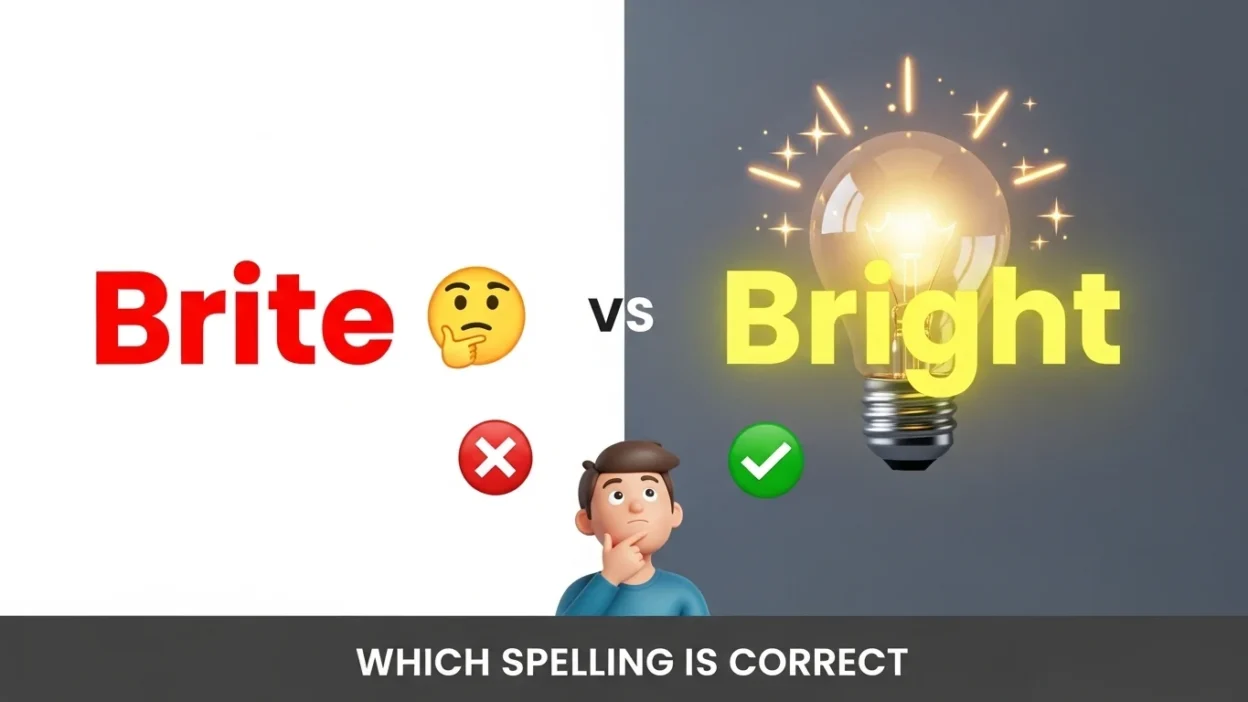
When you come across “brite” and “bright,” it’s easy to wonder if they mean the same thing or if one is simply a misspelling. Many writers, students, and even marketers search for the difference between brite vs bright because the words look nearly identical but are used very differently in real English.
In everyday writing, choosing the correct word matters. Using the wrong spelling can affect clarity, professionalism, and even SEO.
This guide explains the meaning of brite vs bright, shows clear examples, highlights common mistakes, and helps you confidently choose the right word every time.
Quick Answer
Bright is the correct and standard English word meaning full of light, intelligent, vivid, or cheerful.
Brite is not a standard spelling in modern English and is mostly used in brand names, product names, or informal stylized writing.
In almost all writing situations academic, professional, or everyday you should use bright, not brite.
What Does “Bright” Mean?
Bright is a common adjective in English with several related meanings. It generally refers to light, intelligence, vividness, or positivity.
Main meanings of bright
- Full of light
- Intelligent or quick to learn
- Vivid in color
- Cheerful or optimistic
Examples of “bright” in sentences
- The bright sun warmed the entire beach.
- She is a bright student who learns quickly.
- He wore a bright yellow jacket during the race.
- The future looks bright for the new company.
Because of its flexibility, bright is widely used in everyday language, literature, business writing, and online content.
Common synonyms of bright
- luminous
- brilliant
- radiant
- vivid
- smart
- intelligent
- shining
These related terms help writers vary their vocabulary while keeping the same general meaning.
What Does “Brite” Mean?
Brite is usually considered a non-standard or stylized spelling of bright. It rarely appears in formal writing.
Instead, it is commonly used in:
- Brand names
- Product names
- Creative marketing
- Informal stylistic spellings
Examples where “brite” appears
- Brand names like “Color Brite”
- Product lines such as “Brite Clean”
- Informal phrases in marketing slogans
In these contexts, the unusual spelling makes the word more memorable or visually distinctive, but it is not grammatically standard.
Example sentences
- The company launched a new detergent called Ultra Brite.
- Their packaging uses the name FreshBrite for branding.
If you’re writing an essay, blog post, email, or professional document, brite should not replace bright.
Brite vs Bright: Key Differences
| Feature | Bright | Brite |
| Standard English spelling | Yes | No |
| Meaning | Full of light, intelligent, vivid | Stylized spelling of bright |
| Used in formal writing | Yes | No |
| Used in brand names | Rarely | Common |
| Dictionary recognition | Yes | Usually not |
Simple rule to remember
If you are writing normal English, always choose “bright.”
Use “brite” only when it is part of a specific brand name or creative spelling.
Common Mistakes with Brite vs Bright
Many English learners and writers accidentally confuse these two forms. Here are the most common errors.
1. Using “brite” in formal writing
❌ The sky was brite and clear.
✅ The sky was bright and clear.
2. Using “brite” in academic work
❌ She is a brite student.
✅ She is a bright student.
3. Assuming “brite” is British spelling
Some people think brite might be a British version of bright, but this is incorrect.
There is no American vs British difference here. Both varieties of English use bright.
When Is It Okay to Use “Brite”?
Although it’s not standard English, there are a few situations where brite is acceptable.
Branding and product names
Companies sometimes replace bright with brite to create a unique brand identity.
Examples include:
- cleaning products
- laundry detergents
- cosmetic brands
- creative product names
Creative marketing
Marketers may intentionally use unusual spellings to make slogans more eye-catching.
Example:
- “Stay Brite All Day”
However, outside of marketing or branding, this spelling is rarely appropriate.
Why “Bright” Is the Preferred Spelling
There are several reasons bright remains the correct and widely accepted spelling.
1. Historical usage
The word bright has been part of English for centuries. It comes from Old English “beorht,” meaning shining or radiant.
2. Dictionary recognition
Major dictionaries recognize bright, including:
- Merriam-Webster
- Oxford Dictionary
- Cambridge Dictionary
Brite usually appears only as a variant spelling in names.
3. Clarity in communication
Using bright ensures readers instantly understand the meaning without confusion.
Examples of Bright in Different Contexts
Here are a few real-world contexts where bright is commonly used.
Education
- She is one of the brightest students in the class.
Weather
- It was a bright sunny morning.
Personality
- His bright personality makes everyone feel welcome.
Colors
- The painting uses bright colors to create energy.
Future outlook
- The company has a bright future ahead.
These examples show how versatile the word bright is across different situations.
Related Words and LSI Keywords
To better understand brite vs bright, it helps to look at related terms often used with bright.
Common related phrases include:
- bright light
- bright colors
- bright future
- bright idea
- bright student
- bright sunlight
- brilliant mind
- vivid colors
- radiant light
These phrases appear frequently in everyday conversation and writing.
FAQs
1. Is “brite” a real English word?
Not really. Brite is considered a non-standard spelling of bright and mainly appears in brand names.
2. Which spelling is correct: brite or bright?
Bright is the correct and standard spelling used in dictionaries and formal writing.
3. Is “brite” used in British English?
No. Both American English and British English use “bright.”
“Brite” is not a regional spelling difference.
4. Why do companies use the spelling “brite”?
Brands sometimes use brite to create a unique or memorable name for marketing purposes.
FFD86C
No. In academic or professional writing, always use bright.
6. Is “brite” ever correct?
Yes, but only when it is part of a brand name or product title.
7. How can I remember the correct spelling?
Remember that “bright” contains the word “right.”
So bright is the right spelling.
Summary
Understanding the difference between brite vs bright is simple once you know the rule. Bright is the correct English word used to describe light, intelligence, vivid colors, or a positive future. It appears in dictionaries and is used in both American and British English.
Brite, on the other hand, is mostly a creative or stylized spelling used in marketing, brand names, and product titles. Outside of those contexts, it is generally considered incorrect.
Actionable takeaway
Whenever you’re writing emails, articles, essays, or social media posts, choose bright. Save brite only for situations where it is part of an official name or brand.
Following this simple rule keeps your writing clear, professional, and easy to understand.