Have you ever paused while writing and wondered whether to use “bespeckled” or “bespectacled”? You’re not alone. These two words look similar, sound somewhat alike, and are often confused even by fluent English speakers.
In this guide, we’ll clear up the confusion in a simple, friendly way. By the end, you’ll know exactly what each word means, when to use it, and how to avoid common mistakes with confidence.
Quick Answer
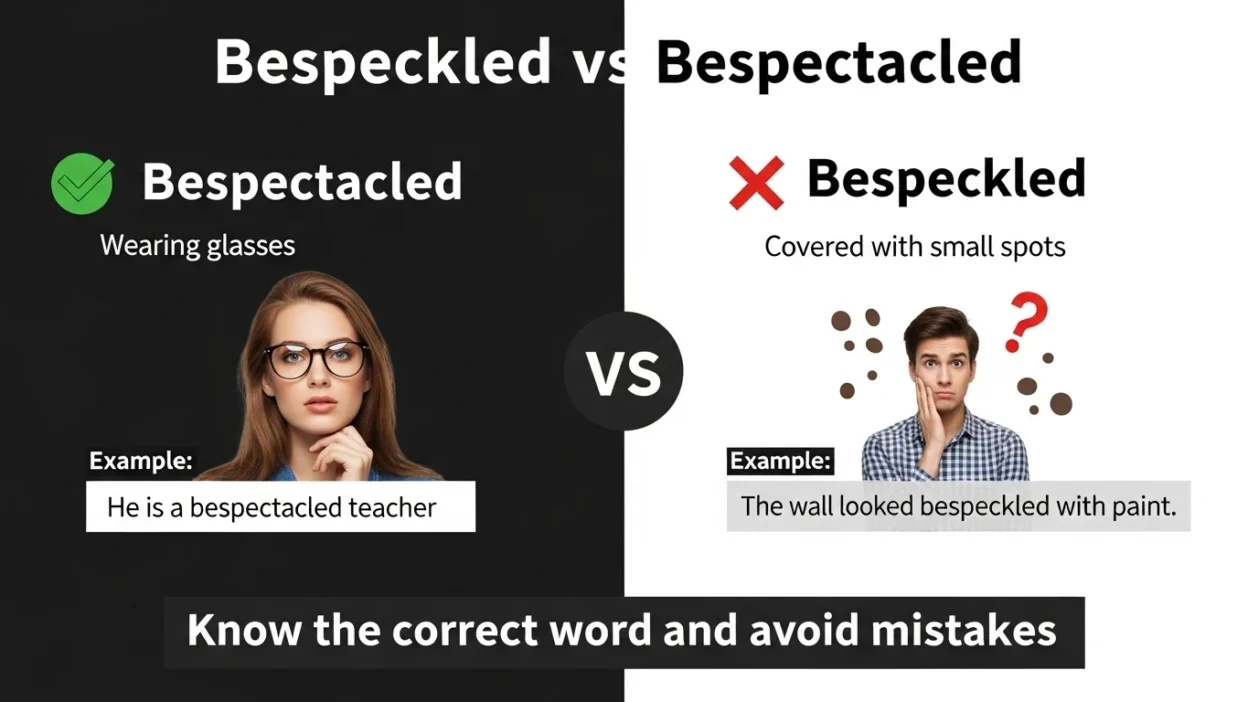
- Bespectacled = Wearing glasses (correct word for someone with spectacles)
- Bespeckled = Covered with small spots or speckles (completely different meaning)
👉 They are not interchangeable, even though they look similar.
What Does “Bespectacled” Mean?
The word bespectacled describes someone who wears glasses. It comes from the noun spectacles, an older term for eyeglasses.
Examples:
- The bespectacled teacher explained the lesson clearly.
- A bespectacled man was reading quietly in the corner.
- She recognized the bespectacled doctor immediately.
This word is slightly formal or descriptive, often used in writing rather than casual speech. In everyday conversation, people usually say:
- “a man wearing glasses”
- “a woman with glasses”
What Does “Bespeckled” Mean?
The word bespeckled has nothing to do with glasses. It means something is covered with small spots, marks, or speckles.
Examples:
- The sky was bespeckled with stars.
- Her dress was bespeckled with paint stains.
- The bird had bespeckled feathers.
As you can see, this word is used for patterns or textures not people wearing glasses.
Key Difference Between Bespeckled and Bespectacled
Here’s a simple way to remember:
- Spectacles = Glasses → Bespectacled (person wearing glasses)
- Speckles = Spots → Bespeckled (covered in dots)
Comparison Table
| Feature | Bespectacled | Bespeckled |
| Meaning | Wearing glasses | Covered with spots or speckles |
| Usage | Describes people | Describes objects or surfaces |
| Root Word | Spectacles (glasses) | Speckles (small dots) |
| Common Context | Formal writing, descriptions | Nature, textures, patterns |
| Example | A bespectacled student | A bespeckled sky |
Common Mistakes to Avoid
Confusing these two words is very common. Here are the most frequent mistakes:
❌ Using “bespeckled” for someone wearing glasses
- Incorrect: The bespeckled boy raised his hand.
- Correct: The bespectacled boy raised his hand.
❌ Assuming both words are interchangeable
They are not synonyms. Each has a completely different meaning.
❌ Overusing “bespectacled” in casual writing
While correct, it can sound formal. In everyday contexts, simpler phrases work better:
- “man with glasses” (more natural)
American vs British English Usage
Good news there’s no major difference between American and British English for these words.
- Bespectacled is understood and used in both varieties of English.
- Bespeckled is also consistent across both.
However:
- “Spectacles” is slightly more common in British English
- “Glasses” is more common in American English
So while the words themselves don’t change, the everyday vocabulary around them might.
Synonyms and Related Words (LSI Keywords)
Using related terms can improve clarity and SEO value. Here are some useful alternatives:
For “Bespectacled”
- wearing glasses
- glasses-wearing
- four-eyed (informal)
- spectacled
For “Bespeckled”
- spotted
- speckled
- dotted
- flecked
These variations help keep your writing natural and engaging.
When Should You Use Each Word?
Use bespectacled when:
- You’re describing a person wearing glasses
- Writing formally or creatively
- Adding detail to a character description
Use bespeckled when:
- Describing patterns, textures, or surfaces
- Talking about nature (sky, feathers, stones)
- Adding vivid imagery
FAQs
1. Is “bespeckled” ever used for people?
No. It describes surfaces or objects with spots not people wearing glasses.
2. Is “bespectacled” outdated?
Not exactly. It’s still correct but slightly formal. It’s more common in writing than speech.
3. Can I use “spectacled” instead of “bespectacled”?
Yes, both are correct. “Spectacled” is slightly shorter and more modern.
4. Which word is more common?
“Bespectacled” is more commonly used than “bespeckled,” especially in descriptive writing.
5. Is “bespeckled” related to “speckled”?
Yes. “Bespeckled” simply emphasizes being fully covered with speckles.
6. What’s the easiest way to remember the difference?
Think:
- Spectacles → Glasses → Bespectacled
- Speckles → Spots → Bespeckled
7. Are these words used in SEO writing?
Yes, especially in grammar-related or educational content where clarity matters.
8. Should I avoid these words in casual writing?
Not necessarily, but simpler phrases are usually more natural in everyday communication.
Summary
The confusion between bespeckled or bespectacled comes from how similar they look, but their meanings are completely different. Bespectacled refers to someone wearing glasses, while bespeckled describes something covered with small spots or marks.
Understanding the root words spectacles and speckles makes the distinction much easier. In everyday writing, choosing the right word helps you sound clear and confident.
While “bespectacled” adds a formal touch to descriptions, “bespeckled” brings vivid imagery to objects and scenes. Using them correctly not only improves your writing but also builds trust with your readers.
Actionable Takeaway
Next time you write:
- Use bespectacled for people with glasses
- Use bespeckled for spotted patterns
👉 If in doubt, replace with simpler phrases like “wearing glasses” or “spotted” for clarity.

Edward Axel is the administrator of SyntaxlyHub, responsible for overseeing site operations, content management, and technical performance. He ensures accuracy, consistency, and smooth functionality while supporting the team in delivering reliable, high-quality grammar resources and a user-friendly learning experience for readers worldwide.